
Introduction
Gochujang Shrimp Pasta is a delightful fusion dish that brings together the rich flavors of Korean cuisine and the comforting appeal of Italian pasta. This recipe is perfect for young professionals who crave a homemade meal but are often pressed for time. With its spicy kick from gochujang, this dish captures the essence of bold flavors in just a few simple steps.

As you prepare this dish, imagine the vibrant colors of the ingredients coming together in harmony. The shrimp, marinated in gochujang and soy sauce, takes center stage, while the spaghetti acts as a perfect canvas to absorb all the delicious spices. Not only is this pasta dish quick to make, but it also offers a delightful balance of spice and umami, making it a go-to recipe for busy weeknights.
In every bite, you’ll experience the warmth of the gochujang paired with the fresh crunch of scallions and the nutty aroma of sesame seeds. It’s a meal that not only satisfies your hunger but also excites your taste buds. So, if you’re looking for a dish that’s both flavorful and easy to whip up after a long day, Gochujang Shrimp Pasta is the answer. Get ready to impress your friends and family with this unique culinary creation!
Key Ingredients
Spaghetti (8 ounces)
This classic pasta serves as the perfect base for the dish, providing a comforting texture that holds onto the flavorful sauce beautifully.
Shrimp (1 pound, peeled and deveined)
Fresh shrimp is the star of this recipe, adding protein and a delightful seafood flavor that pairs well with the spicy gochujang.
Gochujang (2 tablespoons)
This Korean chili paste brings a unique heat and sweetness to the dish, making it the key ingredient that elevates the flavor profile of the pasta.
Soy Sauce (2 tablespoons)
Adding depth and umami, soy sauce complements the gochujang, enhancing the overall savory taste of the shrimp and pasta.
Olive Oil (1 tablespoon)
Used for sautéing, olive oil adds a rich flavor and helps to cook the garlic and shrimp evenly without burning them.
Garlic (3 cloves, minced)
Minced garlic infuses the dish with aromatic flavor, creating a fragrant base that enhances the taste of the shrimp and pasta.
Scallions (1/2 cup, chopped)
Chopped scallions add a fresh, crisp element to the dish, providing a burst of color and a mild onion flavor that balances the heat of the gochujang.
Sesame Seeds (1 tablespoon)
These toasted seeds add a nutty crunch and visual appeal, making the dish not only tasty but also aesthetically pleasing.
Lime Juice (1 tablespoon)
A splash of lime juice brightens up the flavors, adding acidity that cuts through the richness of the dish and enhances its overall freshness.
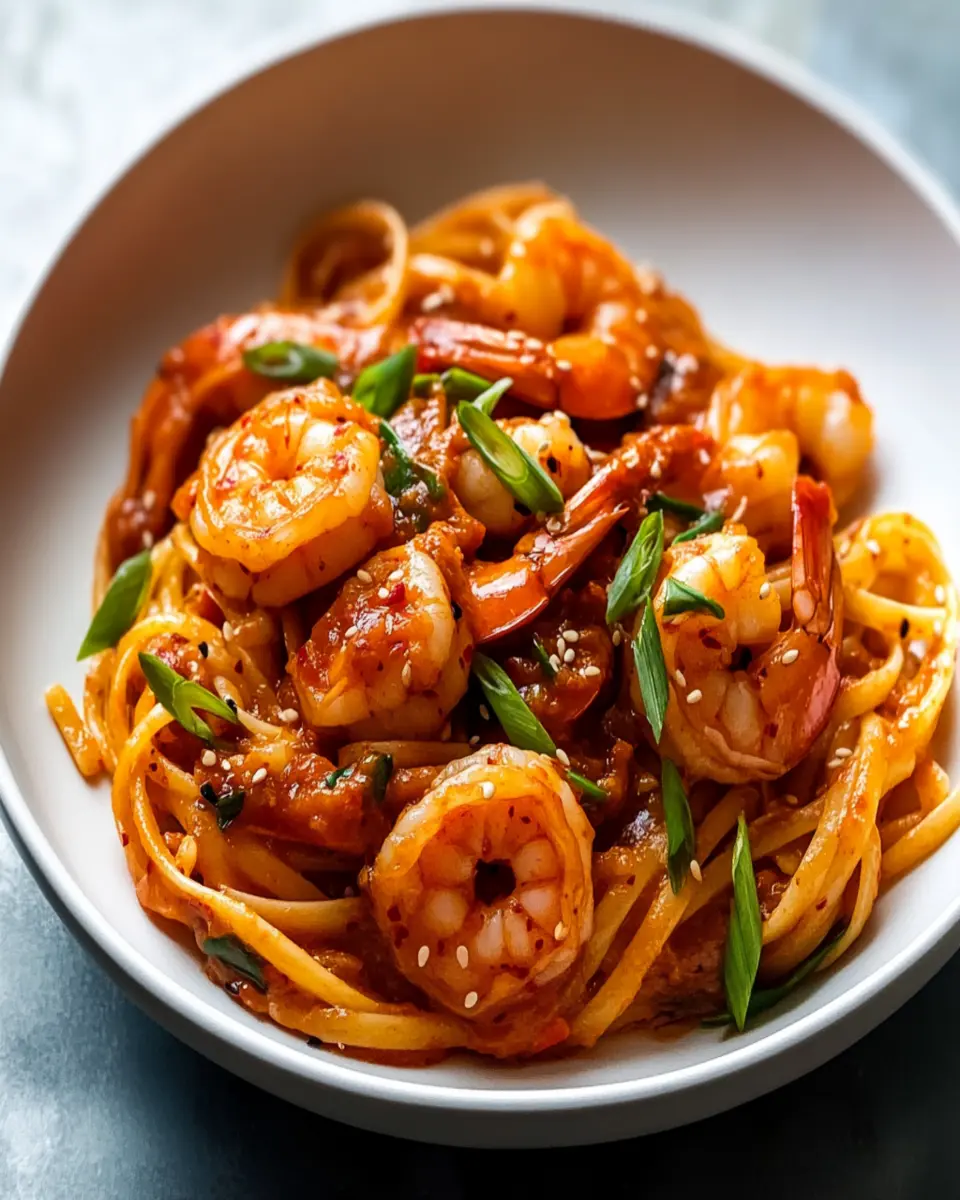
Gochujang Shrimp Pasta combines these ingredients to create a dish that is both vibrant and satisfying, perfect for a quick weeknight meal.
Why You’ll Love This Recipe
Gochujang Shrimp Pasta is a delightful fusion that combines the rich, spicy flavors of Korean cuisine with the comforting essence of pasta. This dish is not only quick to prepare, making it perfect for time-pressed young professionals, but it also offers a unique taste experience that will impress your friends and family.
With its vibrant color and bold flavors, this pasta is sure to brighten your weeknight meals. The gochujang adds a spicy kick, while the shrimp provides a satisfying protein boost, making it a well-rounded dish. Plus, the recipe is incredibly versatile—feel free to adjust the heat level to suit your taste by varying the amount of gochujang.
In just 25 minutes, you can create a delicious meal that feels gourmet without the fuss. Whether you’re cooking for yourself or entertaining guests, Gochujang Shrimp Pasta is a standout choice that will leave everyone asking for seconds!
Variations
Gochujang Shrimp Pasta is a versatile dish that can be easily adapted to suit your taste preferences or dietary needs. Whether you want to switch up the protein, add more vegetables, or create a vegetarian version, there are plenty of options to explore.
Protein Alternatives
If shrimp isn’t your favorite, consider using chicken or tofu. Chicken can be grilled or sautéed in the same sauce, while tofu provides a great vegetarian option. Simply cube the tofu and sauté until golden before adding the gochujang and sauce mixture.
Veggie Boost
For an extra nutritional punch, add vegetables like bell peppers, snap peas, or spinach. These can be tossed in with the garlic to sauté before adding the shrimp, creating a colorful and flavorful dish that’s packed with vitamins.
Noodle Variations
While spaghetti is a classic choice, feel free to experiment with other types of noodles. Rice noodles or zucchini noodles can be great gluten-free options, catering to those with dietary restrictions while still delivering a delicious meal.
Spice Level Adjustments
If you prefer a milder flavor, simply reduce the amount of gochujang. Alternatively, you can add a splash of coconut milk for creaminess that balances the spice, making the dish even more comforting.
With these variations, Gochujang Shrimp Pasta can be customized for any occasion, ensuring it remains a favorite in your weekly meal rotation.
Cooking Tips and Notes
Perfecting Your Pasta
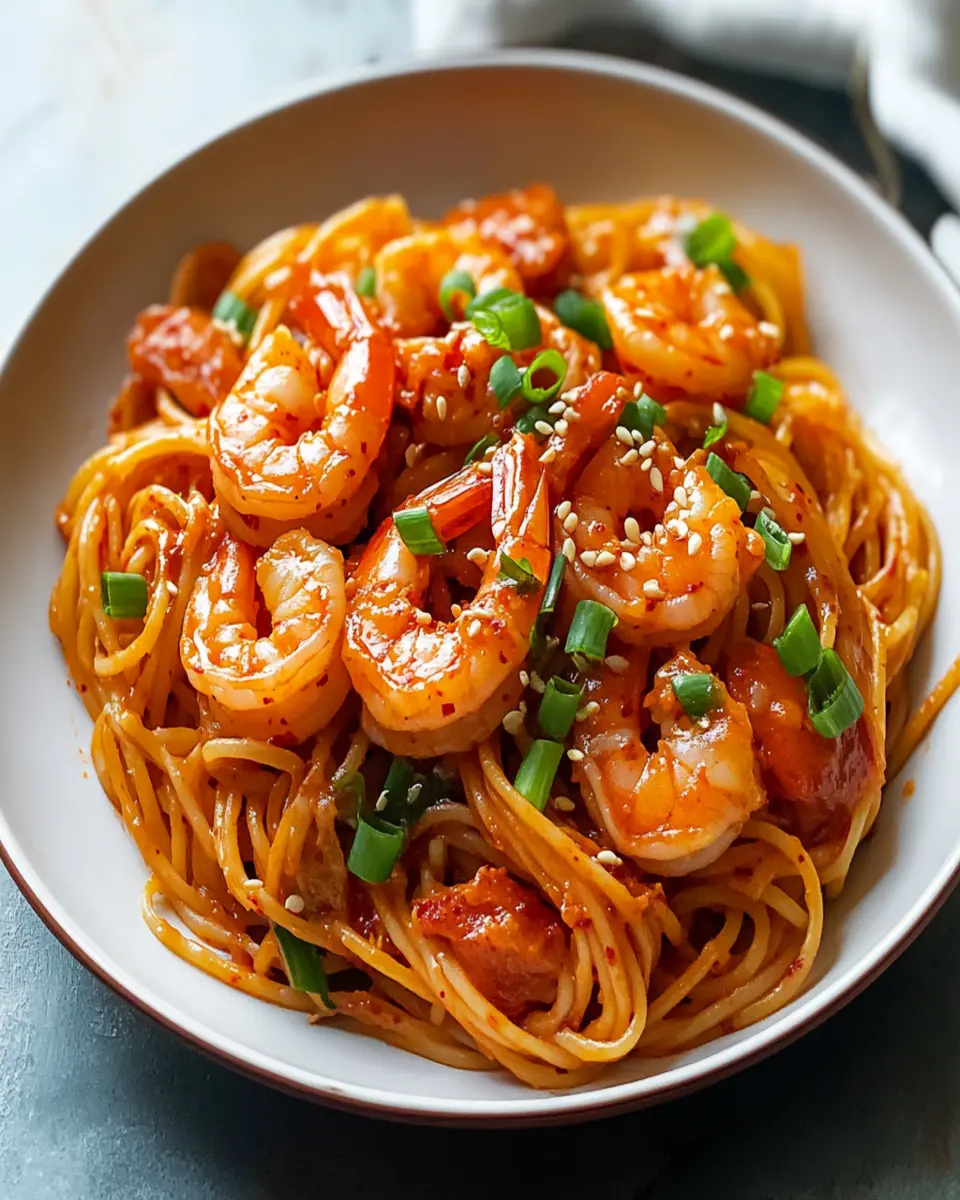
To achieve the ideal texture for your spaghetti, cook it until it is al dente, which means it should be firm to the bite. This will prevent the pasta from becoming mushy when combined with the shrimp and sauce. Remember to reserve a bit of pasta cooking water before draining; it can be used to adjust the sauce consistency later.
Sautéing Shrimp
When cooking the shrimp, make sure not to overcrowd the pan. This allows the shrimp to sear properly, enhancing their flavor and texture. Cook them just until they turn pink and opaque, which usually takes about 2-3 minutes per side. Overcooking can lead to rubbery shrimp, so keep a close eye on them!
Flavor Enhancements
For an extra burst of flavor, consider adding a splash of fish sauce or a sprinkle of red pepper flakes along with the gochujang. These ingredients can elevate the umami profile of your Gochujang Shrimp Pasta. Additionally, garnishing with fresh herbs like cilantro or basil can add a refreshing note to the dish.
By following these tips, you can ensure that your Gochujang Shrimp Pasta is not only delicious but also a feast for the eyes, making it a perfect option for both weeknight dinners and special occasions.
Serving Suggestions
Gochujang Shrimp Pasta is not only a delightful dish on its own but also pairs wonderfully with a variety of sides and accompaniments. Whether you’re hosting a dinner party or enjoying a cozy night in, these serving suggestions will elevate your meal to the next level.
Side Dishes
Consider serving your pasta with a light cucumber salad or a simple green salad dressed with a zesty vinaigrette. The refreshing crunch of the vegetables complements the spicy richness of the pasta beautifully. For something heartier, garlic bread or roasted vegetables can provide a satisfying contrast to the dish.
Garnishes
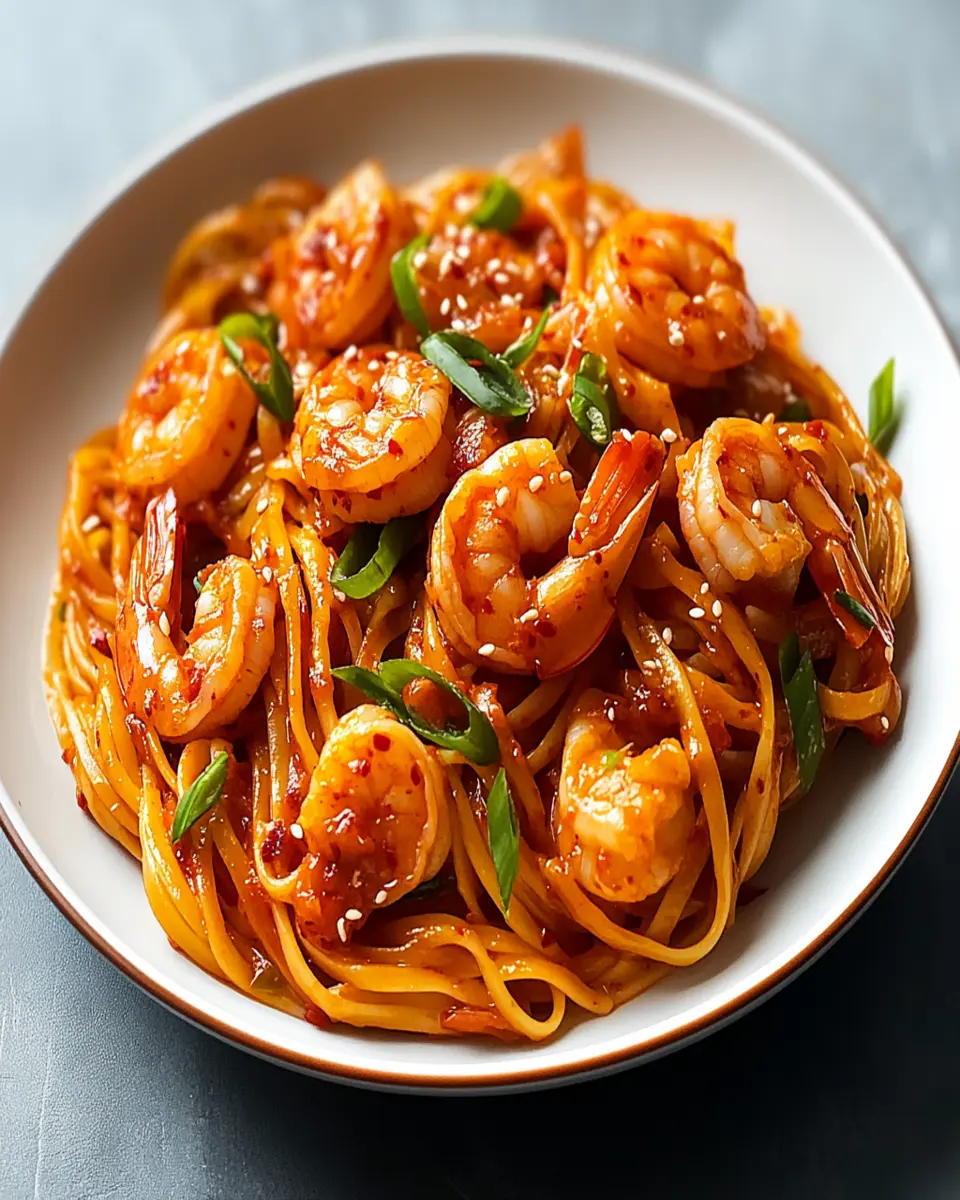
To enhance the presentation and flavor, garnish your Gochujang Shrimp Pasta with additional scallions and a sprinkle of sesame seeds. A squeeze of lime over the top just before serving adds a burst of freshness that brightens the entire dish. Don’t forget to keep extra lime wedges on the side for those who enjoy a little extra tang!
Beverage Pairing
When it comes to drinks, a light white wine like Sauvignon Blanc or a refreshing iced tea can balance the dish’s heat. If you prefer non-alcoholic options, try serving sparkling water with a slice of lime for a refreshing palate cleanser.
By incorporating these serving suggestions, you can create a well-rounded and memorable dining experience that highlights the unique flavors of Gochujang Shrimp Pasta.
Time Breakdown
Preparation
Prepare your ingredients by peeling and deveining the shrimp, mincing the garlic, and chopping the scallions. This step should take about 10 minutes.
Cooking
Cooking the Gochujang Shrimp Pasta takes approximately 15 minutes. Start by boiling the spaghetti while you sauté the garlic and shrimp in a skillet.
Total Time
In total, you’ll spend just 25 minutes to create this delicious dish, making it an ideal option for a quick weeknight meal. With everything prepped and ready, you can enjoy a flavorful dinner in no time!
Nutritional Facts
Gochujang Shrimp Pasta is not only delicious but also provides a balanced meal option. Each serving contains approximately 450 calories, making it a satisfying choice without being overly indulgent. Packed with 25 grams of protein, this dish is great for muscle repair and energy, while the healthy fats contribute to overall well-being.
In terms of macronutrients, you’ll find 60 grams of carbohydrates, which provide the energy needed for your day. The dish also contains 12 grams of total fat, with only 2 grams being saturated fat, keeping it heart-healthy. For those watching their sodium intake, each serving has about 900 milligrams, so consider pairing it with low-sodium sides if needed. Overall, Gochujang Shrimp Pasta is a flavorful and nutritious option that can fit well into a balanced diet.
FAQ based on “People Also Ask” section
What is Gochujang Shrimp Pasta?
Gochujang Shrimp Pasta is a flavorful dish that combines spaghetti with shrimp, gochujang, and other savory ingredients. This fusion recipe reflects the spicy and bold flavors of Korean cuisine, making it a delightful meal option for pasta lovers.
How long does it take to prepare Gochujang Shrimp Pasta?
The total time to prepare Gochujang Shrimp Pasta is about 25 minutes. With just 10 minutes of prep time and 15 minutes of cooking, it’s an excellent choice for busy weeknights when you want a quick yet satisfying meal.
Can I make Gochujang Shrimp Pasta vegetarian?
Yes, you can easily make Gochujang Shrimp Pasta vegetarian by substituting shrimp with tofu or your favorite vegetables. Simply sauté the tofu until golden and use the same gochujang sauce to maintain the dish’s signature flavor.
What can I serve with Gochujang Shrimp Pasta?
This dish pairs well with a light cucumber salad or garlic bread. Additionally, a refreshing drink like sparkling water with lime can complement the spicy flavors, making for a well-rounded meal experience.
Conclusion
Gochujang Shrimp Pasta is a delightful fusion of flavors that brings together the best of Korean cuisine and Italian comfort food. This dish is not only quick to prepare but also incredibly satisfying, making it perfect for young professionals seeking a homemade meal without the fuss. With its spicy kick from gochujang and the fresh zest of lime, every bite is a culinary adventure.
As you experiment with this recipe, remember that it’s versatile—feel free to adjust the spice level or add your favorite vegetables to suit your taste. Whether you’re cooking for yourself or entertaining friends, Gochujang Shrimp Pasta is sure to impress. So why not give it a try? Cook, save, and share this recipe with fellow food lovers, and enjoy the deliciousness that comes from combining bold flavors with simple ingredients!
Print
Gochujang Shrimp Pasta
- Total Time: 25 minutes
- Yield: 4 servings 1x
- Diet: Gluten-Free
Description
A spicy and flavorful pasta dish featuring shrimp and gochujang.
Ingredients
- 8 ounces spaghetti
- 1 pound shrimp, peeled and deveined
- 2 tablespoons gochujang
- 2 tablespoons soy sauce
- 1 tablespoon olive oil
- 3 cloves garlic, minced
- 1/2 cup scallions, chopped
- 1 tablespoon sesame seeds
- 1 tablespoon lime juice
Instructions
- Cook the spaghetti according to package instructions.
- In a large skillet, heat olive oil over medium heat.
- Add garlic and sauté until fragrant.
- Add shrimp, gochujang, soy sauce, and lime juice; cook until shrimp are pink.
- Toss cooked spaghetti with the shrimp mixture.
- Garnish with scallions and sesame seeds before serving.
Notes
- For a milder dish, reduce the amount of gochujang.
- Serve with lime wedges for extra flavor.
- Prep Time: 10 minutes
- Cook Time: 15 minutes
- Category: Main Course
- Method: Stovetop
- Cuisine: Korean
Nutrition
- Serving Size: 1 serving
- Calories: 450
- Sugar: 2g
- Sodium: 900mg
- Fat: 12g
- Saturated Fat: 2g
- Unsaturated Fat: 8g
- Trans Fat: 0g
- Carbohydrates: 60g
- Fiber: 3g
- Protein: 25g
- Cholesterol: 150mg